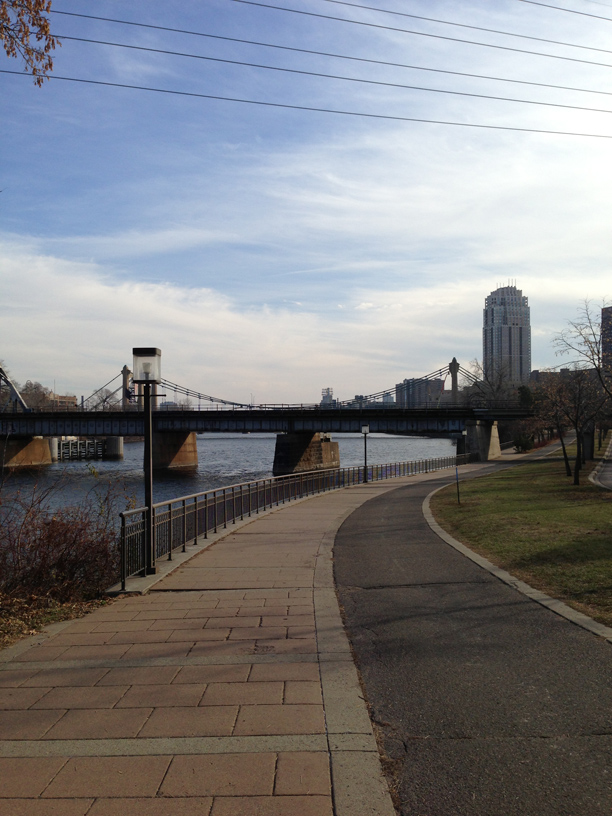
 11/17/2012 It was such a beautiful weekend for a walk. We didn’t have to layer up, but we brought jackets just incase. We have learned that it is a little cooler by the river and the wind can be a little relentless. We saddled up the dogs (just kidding we put on their brassieres…haha their harnesses). This time we were going to push everyone a little further and walk all the way down to the stone arch bridge.
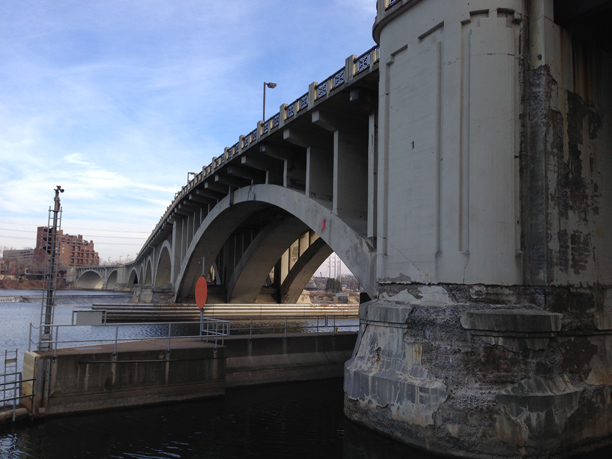
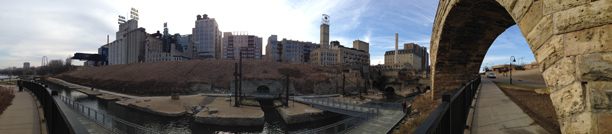
It’s about a mile and a half from our building. Just past the stone arch bridge there is a park called Mill Ruins. It is located in the heart of the Mill City District. 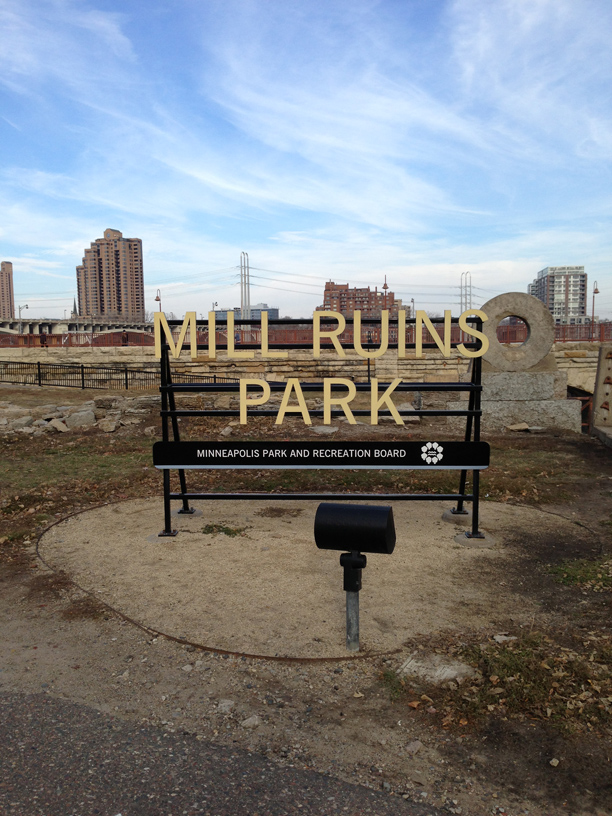 “In its 19th-century heyday, this area of mills, canals, tailraces and other historic resources comprised the largest direct-drive water-powered facility in the world and was the leading international producer of flour, a commodity which was shipped both nationwide and worldwide…The park tells this story through the now exposed historic walls and waterpower features long buried beneath many feet of sand and gravel.
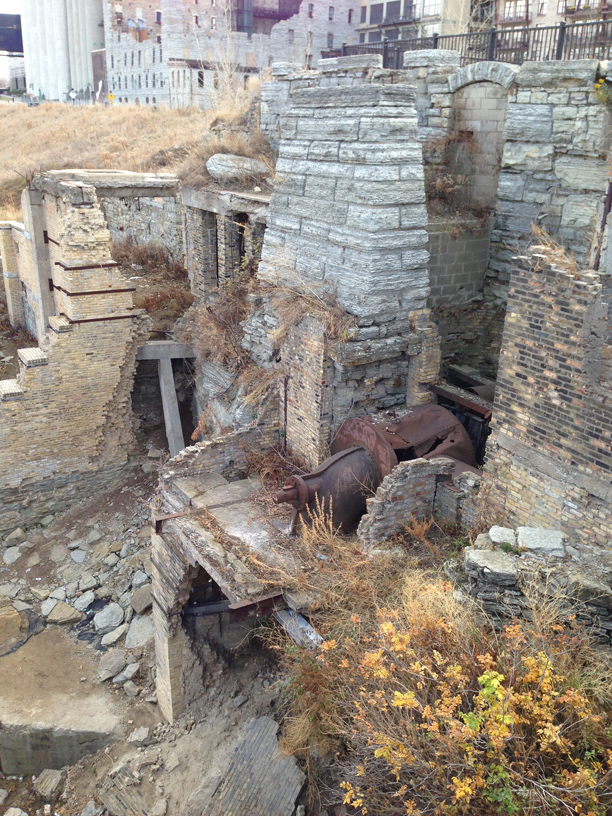 With the reopening of the historic tailrace canal, which carried water from the mill turbines back to the river, visitors have the opportunity to interact directly with an exciting water feature.”
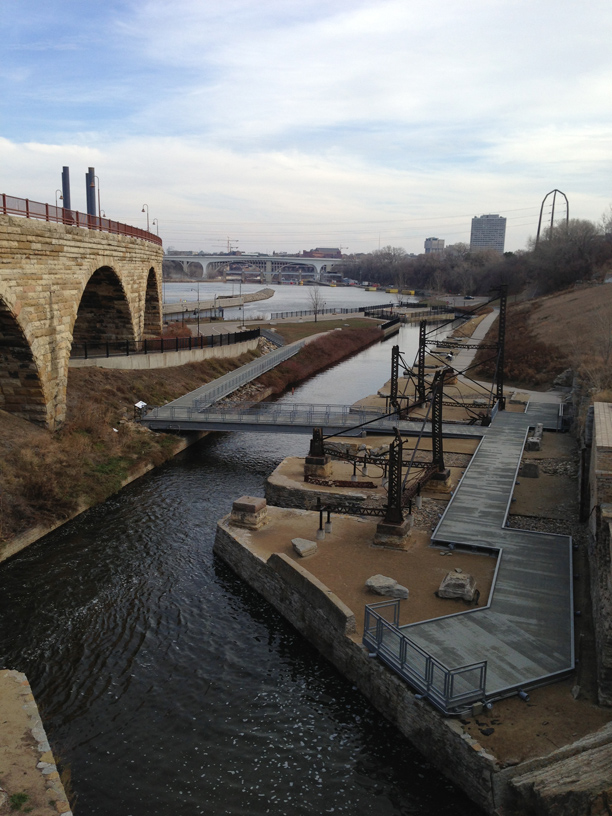 We explored the ruins and enjoyed the sunshine.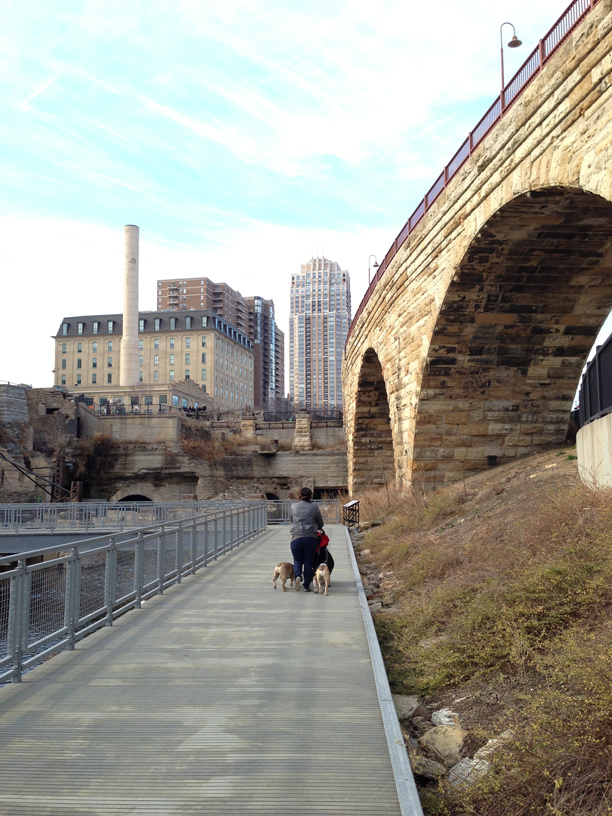
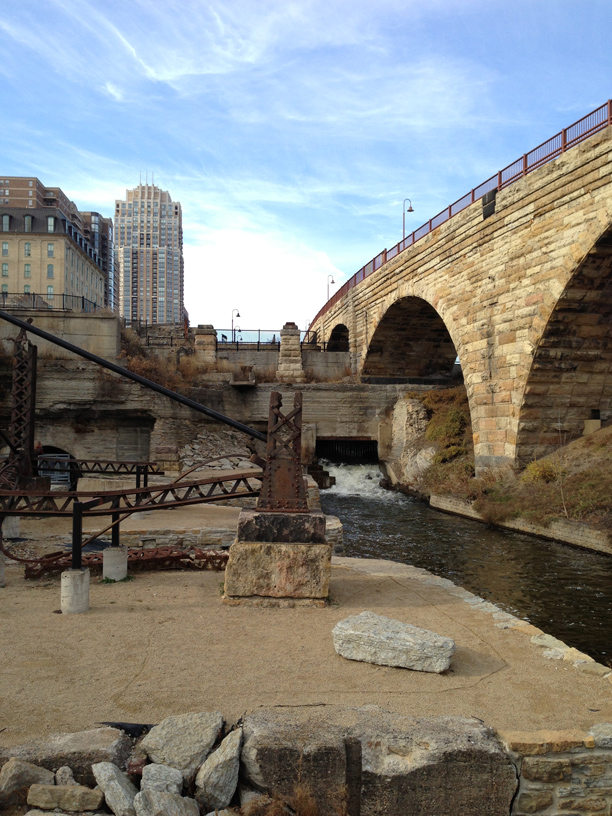
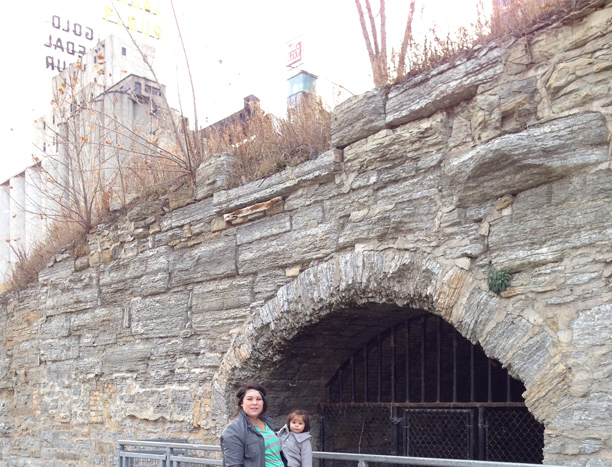
 Minneapolis has such a rich history in grains and milling. In the night sky you see the Gold Medal Flower and Pillsbury sign lit up. A little history about the ruins, as citied from the Museum website, “Mill City Museum is built into the ruins of the Washburn A Mill, along the Mississippi River in Minneapolis, Minnesota. The original A Mill, built in 1874, was leveled by a flour dust explosion that claimed 18 lives. That explosion and the resulting fire destroyed much of the riverfront business area, cutting Minneapolis’ milling capacity in half.The A Mill was rebuilt by 1880, with state-of-the-art machinery that permitted safer operations while producing higher quality flour. At the time it was the largest and most technologically advanced mill in the world, featuring new automatic steel rollers instead of traditional millstones. During its heyday, it was said that the mill ground enough flour to make 12 million loaves of bread a day.As technology and consumer preferences evolved, the A Mill became obsolete, and was shut down in 1965. In 1991, it was nearly destroyed by fire.”
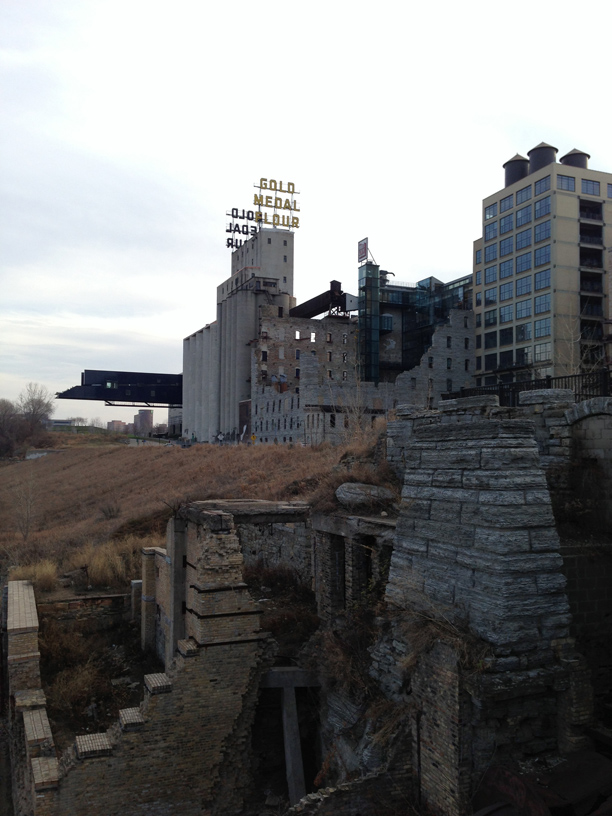
Living in the warehouse district we get to see a lot of old buildings being renovated and converted. One thing we have come to appreciate is how well the buildings are respected and the integrity of the original building is maintained. While we walked around the ruins we noticed that there was very little vandalism. It is great being apart of a community that appreciates the cities history. Lunch was calling our names so we decided to head back home. It was a lovely walk and the boys got some much needed exercise. We look forward to checking out the Mill City Museum one of these days. It will be fun to learn about the roots of this city.

 It is well with my Soul